Key takeaways
- Warehouse air conditioning, meaning cooling a whole building (our commercial air conditioning guide covers the system types), means a large volume of air and a large system. Many sites cool the people instead, with fans, evaporative coolers or portable spot coolers at work stations.
- Fans and evaporative coolers use the least electricity but do not dry the air; the Energy Technology List says direct evaporative coolers can leave the cooled air very humid.
- Regulation 7 says the temperature in indoor workplaces “shall be reasonable”; on a maximum, HSE says “There’s no law for maximum working temperature, or when it’s too hot to work, because every workplace is different.” HSE gives 13C as a minimum where much of the work involves rigorous physical effort.
- For one picking area over an 8-hour shift at DESNZ’s April to June 2026 small business average (28.59p per kWh, excluding VAT): three floor fans cost 72.4p, one evaporative cooler 52.6p and one Broughton MCe9.0 spot cooler up to £5.42 on our upper estimate.
- Outdoor air conditioning plant on a business building in England is likely to need planning permission: ask the council before you order.
What are you cooling: people, stock or both?
Warehouse cooling is a different job from office air conditioning. Staff comfort is a workplace duty, covered below. Stock, such as chilled or temperature-sensitive goods, has limits set by the goods’ makers: ask them, because we found no general figure. A refrigerated store is not the same as a cooled working area, and this page covers the working area. Our pillar guide to commercial air conditioning covers the system types, and industrial air conditioning covers factories and process heat.
What are the options for a large open space?
Spot cooling with portables
A portable cools one area. Broughton says portable systems “are ideal for environments where emergency, back up or additional cooling is needed”. Its MCe9.0 monoblock is “capable of supplying about 9kW of chilled air to two areas simultaneously”, and the hot air has to be ducted out of the area. Our product file records a 10.3 A running current, a 65 dB maximum noise figure and 15 to 35C operating range (Broughton’s May 2023 sheet, which we could not re-open; file checked 14 November 2026). See commercial portable air conditioners and the best industrial portable air conditioners.
Evaporative cooling
The Energy Technology List (a DESNZ service, 4 October 2024) says evaporative air coolers suit “especially in high-demand sectors like data centres, production facilities, distribution centres and office buildings”, and that direct evaporative coolers “can achieve energy and carbon savings of up to 80% compared to air conditioning”. It also says direct cooling “can lead to high humidity levels in the cooled air produced”. HSE says “High-humidity environments have a lot of vapour in the air, which prevents sweat evaporating.” The 80% is a claim about direct coolers in general. See evaporative coolers explained and evaporative cooler vs air conditioner.
Fans
HSE’s page on managing workplace temperature lists “Provide fans, such as desk, pedestal or ceiling-mounted ones”. A fan moves air and does not lower its temperature: see industrial cooling fans and best large floor fans.
Full air conditioning
A central system, such as VRF or chilled water, can cool a whole building. Designing Buildings says VRF “may be less suited to large uniform spaces such as gymnasiums or theatres”; it does not name warehouses, so we draw no conclusion about them. We found no published price for installing commercial air conditioning: it depends on volume, insulation, doors, heat sources and the building. See VRF air conditioning explained.
What does the law say for warehouse staff?
This is general information, not legal advice. It covers England, Wales and Scotland.
- Regulation 7 of the Workplace (Health, Safety and Welfare) Regulations 1992 says “During working hours, the temperature in all workplaces inside buildings shall be reasonable.”
- HSE says employers must stick to health and safety law, including “keeping the temperature at a comfortable level”, and that “There’s no law for maximum working temperature, or when it’s too hot to work, because every workplace is different.”
- HSE says the minimum indoor temperature “should normally be at least” 16C, or 13C “if much of the work involves rigorous physical effort”.
- HSE’s steps for hot workplaces include fans, “air-cooling or air-conditioning and adequate ventilation”, shading, insulating hot plant and pipes, cold water dispensers, job rotation and breaks. See workplace temperature law.
What does it cost to run?
The domestic price cap does not apply to businesses, so use the unit rate on your own bill. As a guide this page uses DESNZ’s averages for April to June 2026, including Climate Change Levy and excluding VAT: 28.59p per kWh for small businesses (20 to 499 MWh a year) and 38.36p for very small ones (0 to 20 MWh). The running costs section of our commercial air conditioning guide explains the figures.
One picking area, one 8-hour shift. The list is ordered by shift cost, lowest first.
| Option | Power | kWh per shift | At 28.59p | At 38.36p |
|---|---|---|---|---|
| One Maha-Kool 70 L evaporative cooler | 230 W | 1.84 | 52.6p | 70.6p |
| Three Sealey HVF20 floor fans | 3 x 105.5 W = 0.3165 kW | 2.532 | 72.4p | 97.1p |
| One Broughton MCe9.0 spot cooler | up to 2.369 kVA | 18.95 | up to £5.42 | up to £7.27 |
The Broughton figure is our upper estimate: it publishes a running current (10.3 A), not a wattage, and 230 V x 10.3 A = 2.369 kVA. Real power is lower if the power factor is below 1. The three options do different jobs: the cooler adds humidity, the fans move air, the portable removes heat from a small area. They are not like-for-like. The Maha-Kool was listed at £419.99 on B&Q’s online marketplace (checked 25 November 2026); the Sealey showed “Price on Application” at Rapid Online (25 November 2026); we found no price for the MCe9.0.
Do you need planning permission?
In England, Planning Portal says installations of air source heat pumps on non-domestic land “are likely to require an application” for planning permission, so assume you need it and ask the council. Wales, Scotland and Northern Ireland were not checked. See air conditioning planning permission.
How to brief an installer
- Floor area, roof height and construction, and how well insulated it is.
- Dock doors: how many, and how often they are open.
- Where people work and for how long, and how physical the work is.
- Heat sources: machinery, charging equipment, sunlight through roof lights.
- What is stored, and any temperature or humidity limit from the goods’ makers.
- Ask for: a heat load calculation, the make and model of every unit, what is excluded from the price, planning and building regulations responsibilities, and who holds the F-gas records for any refrigerant system.
Frequently asked questions
What is the cheapest way to cool a warehouse?
Fans and evaporative coolers draw the least electricity: 3.0p an hour for a Sealey floor fan and 6.6p for the Maha-Kool at 28.59p per kWh. They do not dry the air, and direct evaporative coolers can leave it humid.
Is there a maximum temperature for warehouse workers?
Regulation 7 says the temperature in indoor workplaces “shall be reasonable”; on a maximum, HSE says “There’s no law for maximum working temperature, or when it’s too hot to work, because every workplace is different.”
Do evaporative coolers work in UK warehouses?
The Energy Technology List names distribution centres among the sectors they suit, and warns about humid output from direct coolers. We found no UK test of the Maha-Kool, so check the humidity of your space and the maker’s guidance.
Can you air condition a whole warehouse?
Yes in principle, but the volume is large and we found no published price. Designing Buildings says VRF may suit buildings with varying demand and be less suited to large uniform spaces; it does not name warehouses.
Do portable air conditioners work in warehouses?
As spot coolers, they can cool a work station if the hot air is ducted out. They use far more electricity than a fan: up to £5.42 a shift for the MCe9.0 on our upper estimate.
Do warehouse cooling systems need planning permission?
Outdoor air source plant on a business building in England is likely to, per Planning Portal. Fans and portables with no outdoor unit are not covered by the sources we opened.
Sources
- HSE: Temperature in the workplace (updated 3 November 2026) (checked 27 November 2026)
- HSE: Managing workplace temperature (checked 25 November 2026)
- HSE: Thermal comfort (checked 25 November 2026)
- legislation.gov.uk: Workplace (Health, Safety and Welfare) Regulations 1992, regulation 7 (checked 25 November 2026)
- Energy Technology List: ETL and Eurovent certification, evaporative air coolers (4 October 2024) (checked 25 November 2026)
- Designing Buildings: Variable refrigerant flow VRF (checked 25 November 2026)
- Planning Portal: Heat pumps, non-domestic (checked 25 November 2026)
- DESNZ: Gas and electricity prices in the non-domestic sector, table 3.4.2 (checked 25 November 2026)
- Broughton: portable air conditioning range (checked 25 November 2026)
- Broughton: MCe9.0 specification sheet, May 2023 (could not re-open; as recorded in our product file, checked 14 November 2026)
- Rapid Online: Sealey HVF20 industrial high velocity floor fan (checked 25 November 2026)
- B&Q: Maha Kool 70L industrial evaporative cooler (checked 25 November 2026)
Products on this page
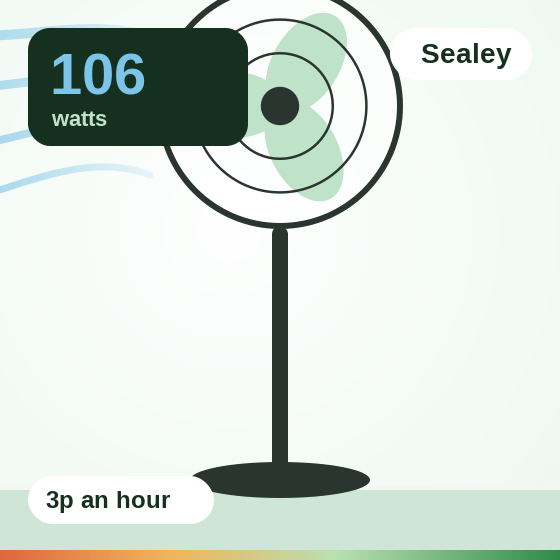
Sealey
HVF20 Industrial High Velocity Floor Fan 20" 230V
106 watts · 3p an hour
No current UK price found
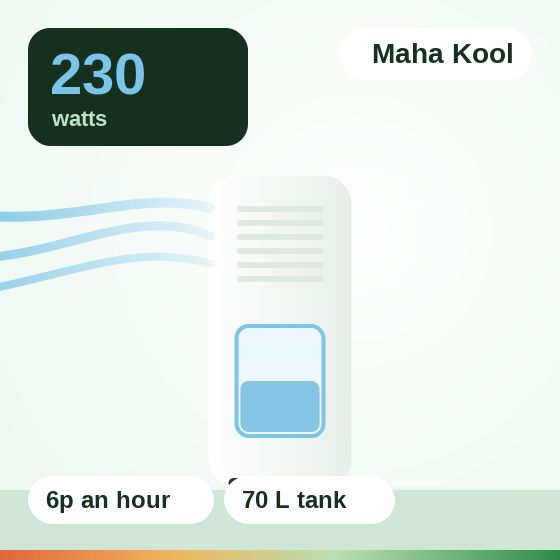
Maha Kool
70L Industrial Evaporative Cooler (metal fan blades, 3 speeds)
230 watts · 6p an hour · 70 L tank
£419.99 at B&Q (marketplace, online only), checked 14 Nov 2026
See it at B&Q (marketplace, online only)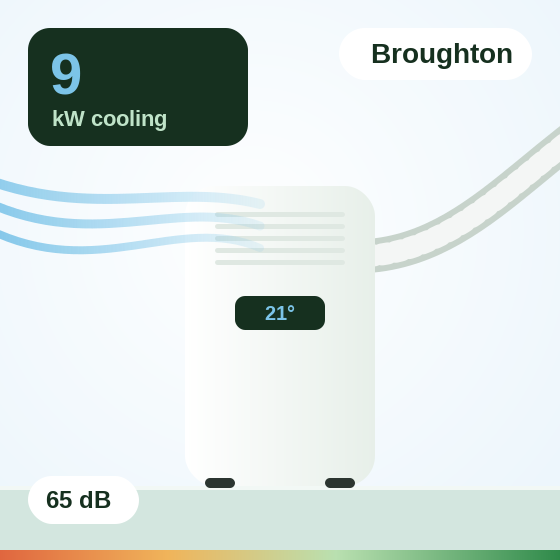
Broughton
Mighty Cool MCe9.0 Low GWP Portable Monoblock Air Conditioner (230V)
9 kW cooling · 65 dB
No current UK price found
Figures from the maker or retailer listing. Cost an hour is our own, at the price cap of 26.32p a kWh.