Key takeaways
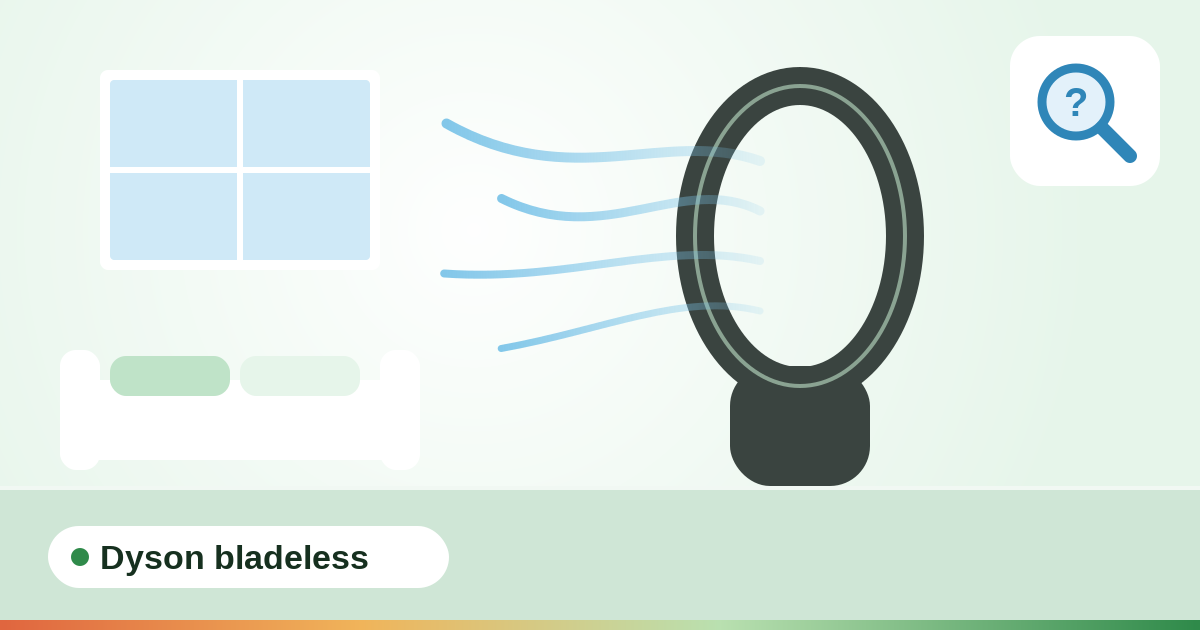
- A Dyson bladeless fan still has a motor and moving parts. “Bladeless” means there are no open blades to touch: the retailers we read describe air being drawn in and pushed out through a ring or a slot.
- Retailers repeat Dyson’s claim that Air Multiplier technology “amplifies surrounding air up to 13 times” (Cool CF1) or “up to 15 times” (Purifier Cool PC1). These are Dyson’s claims, not figures we have checked.
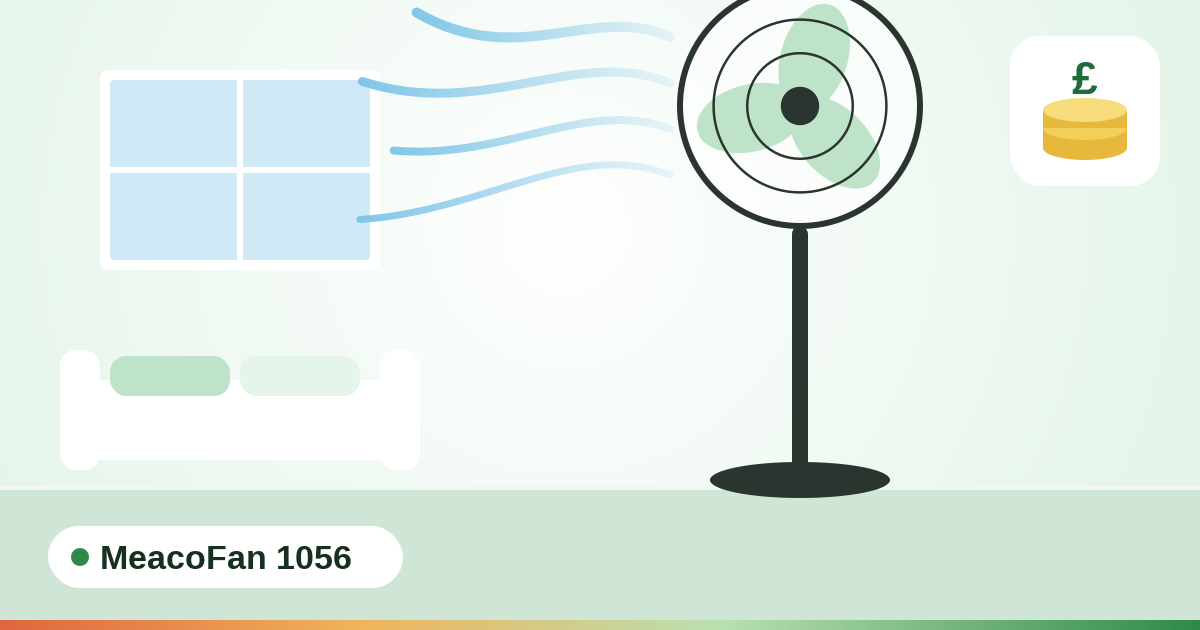
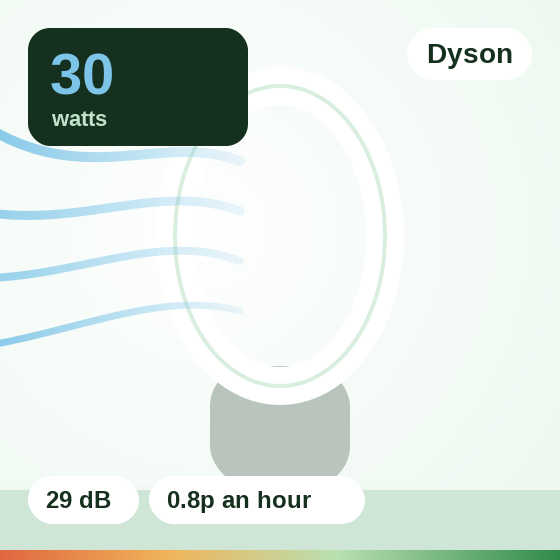
- Bladeless does not mean much cheaper to run. The Cool CF1 is listed at 30 W, which costs 0.8p an hour at the Great Britain price cap of 26.32p per kWh (1 October to 31 December 2026). A MeacoFan 1056 with ordinary blades is 24 W, which costs 0.6p.
- Four bladeless Dyson models were listed by UK retailers on 25 November 2026: the Cool CF1 desk fan, the Hot+Cool HF1, the Purifier Cool PC1 and the Purifier Hot+Cool HP1. The older AM07 tower is not one to plan around.
A Dyson bladeless fan is a fan with no open, spinning blades, and this page explains how that works and how the models in Dyson’s range differ. We have not tested any of them. Dyson’s own UK site refuses automated requests, so every fact here comes from UK retailer listings (John Lewis, Euronics, Marks Electrical and B&Q) that we opened on 25 November 2026. For which model to buy and what each costs, start with our Dyson fans guide; this page keeps to the technology and the family tree.
The short answer: bladeless does not mean motorless
Every fan needs a motor. What Dyson removed is the open blade cage. Euronics’ listing for the Cool CF1 says air is accelerated through an “annular aperture”, which it says draws in surrounding air to project “smooth, uninterrupted airflow”. It also mentions an “acoustically engineered motor bucket with Helmholtz silencer”. John Lewis lists the Cool CF1 as “Bladeless” and says it delivers “no loud spinning blades” and “no choppy air”.
The listings do not explain the motor and the airflow path in any more detail than that. Dyson’s own explanation sits on a site we cannot read, so we do not describe the inner workings beyond what those listings say.
How Dyson’s Air Multiplier works
What the retailers say
Dyson calls its technology Air Multiplier. The wording differs by model:
- Cool CF1. Euronics: “Patented Air Multiplier technology” that “amplifies surrounding air up to 13 times”. Marks Electrical and John Lewis use the same “up to 13 times” line.
- Purifier Cool PC1. John Lewis: “Dyson Air Multiplier technology amplifies surrounding air up to 15 times”.
- Hot+Cool HP1. John Lewis: “Air Multiplier technology projects over 290 litres of air per second”, and adds that it is a fan, not an air-conditioning unit.
“Amplifies” means the fan pushes out a stream of air that carries more of the room’s air along with it. We cannot check the multiplier from a listing, and the 13 and 15 differ between models, so treat them as Dyson’s claims. Euronics gives the CF1 an airflow of 370 litres per second; John Lewis gives the PC1 and HP1 290 litres per second.
What it changes, and what it does not
According to the listings, the design changes how the fan looks, how it is cleaned and what you can touch. John Lewis calls it “bladeless, safe and easy to clean”. We have not read a Dyson manual, so we do not make safety claims for any model, and the Hot+Cool models are heaters too: check the maker’s instructions before you put one near children or pets.
It does not change the job. A fan moves air across your skin, which helps you feel cooler, and does not lower the room’s temperature. Fans help while the air is below 35C. The NHS says “Electric fans can help if the temperature is below 35 degrees”; UKHSA says use them “if the air temperature is below 35°C” and not to aim them directly at your body. See our heatwave guide.
The Dyson bladeless family, as retailers list it
We cover only the models UK retailers listed on 25 November 2026. The table runs from the desk-sized fan to the towers. Prices and stock are as we saw them that day.
| Model | Type | Rated power | Noise as listed | Price and stock, 25 November 2026 |
|---|---|---|---|---|
| Cool CF1 | Desk fan, 55 cm, 10 speeds | 30 W (Euronics, Marks Electrical) | 29 dB (Euronics); 56 dB, no speed stated (Marks Electrical) | £249 at John Lewis (add to basket, no stock message); £249 at Marks Electrical (not in stock, delivery in 4+ weeks); £249.99 at Euronics (no stock near the postcode we entered) |
| Purifier Cool PC1 | Purifying tower, 10 speeds | 50 W (John Lewis; “typical”, Marks Electrical) | 42.6 dB low, 61.4 dB high (Marks Electrical) | £449 at John Lewis and Marks Electrical (in stock at Marks) |
| Hot+Cool HF1 | Fan heater, desk, 10 speeds | Fan: not stated. Heater: 2,250 W maximum (Marks Electrical) | 26 dB in sleep mode (John Lewis, Euronics, Marks Electrical) | £329 at John Lewis (was £399); £329.99 at Marks Electrical (in stock) |
| Purifier Hot+Cool HP1 | Purifying fan heater tower, 10 speeds | Fan: not stated. 2,362 W maximum, fan and heater together (Marks Electrical) | 63 dB, no conditions stated (Marks Electrical) | £549 at John Lewis; £539.98 at Marks Electrical (in stock) |
Desk: Cool CF1
The CF1 is the plain cooling fan: 1.8 kg, 55 cm tall, with oscillation of 15, 40 or 70 degrees and a sleep timer from 30 minutes to 8 hours (John Lewis). More in Dyson desk fans.
Tower, purifying: Purifier Cool PC1
John Lewis lists it at 1,050 mm tall with 350 degree oscillation and says its “HEPA H13 filter captures 99.95% of pollutants as small as 0.1 microns”. That is Dyson’s filtration claim as John Lewis prints it. See Dyson cool tower fans.
Hot and cool: HF1 and HP1
Both are bladeless fans with a heater. The heater is the big power draw: 2,250 W on the HF1 costs 59.2p an hour (2.25 kW times 26.32p). That is a heating cost, not a cooling cost. See Dyson hot and cool fans.
Older towers: the AM07
On 25 November 2026 John Lewis said the AM07 was “No longer available online” and “We’re unlikely to receive more stock of this item”, Marks Electrical said the item was not available and marked it “(Discontinued)”, and B&Q listed it at £319.99, out of stock. No listing gives a usable wattage. We do not suggest it as a pick; see the Dyson AM07 page.
The HushJet Mini Cool is not an Air Multiplier fan
Euronics describes the £99.99 HushJet Mini Cool as a rechargeable fan with a “HushJet motor”, six speeds and a honeycombed mesh. It does not use the Air Multiplier wording, so we leave it out of this family.
Bladeless against a normal fan
Power use
Take the worked example once. The CF1 is rated at 30 W, which is 0.03 kW. An hour uses 0.03 kWh, which costs 0.8p at 26.32p per kWh. Eight hours costs 6.3p. A 1,000 W portable air conditioner costs 26.3p for one hour, the same as about 33.3 hours of this fan.
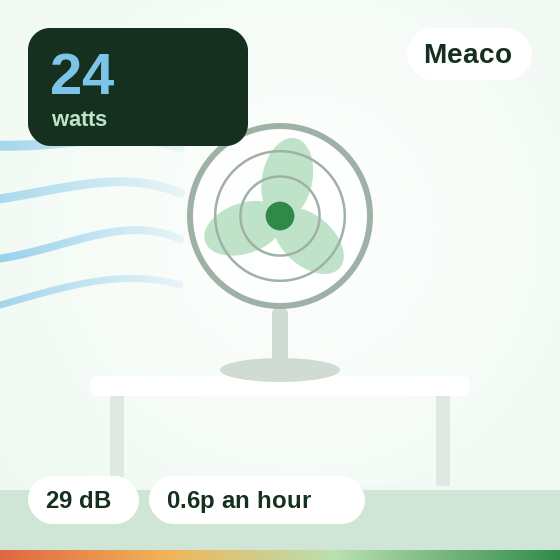
For comparison, the MeacoFan 1056 air circulator, an ordinary bladed fan, is rated at 24 W by Meaco: 0.6p an hour, 5.1p for eight hours, or about 41.7 hours for the price of one hour of that air conditioner. Meaco gives 9.5 W at its lowest speed, 0.3p an hour. The difference between the two fans is 0.2p an hour. We did not re-open Meaco’s page on 25 November 2026, so the Meaco figures are as we recorded them on 14 November 2026.
These figures use the Great Britain price cap. In Northern Ireland, use the unit rate on your own bill. They are at the listed power, which Euronics says for the CF1 is at “maximum fan speed”; a fan draws less at lower speeds. The standing charge is left out. The eight-hour figure is a measure of cost, not advice to run a fan all night.
We found no confirmed fan-only wattage for the HF1, HP1, HushJet Mini Cool or AM07 on any listing we could read, so we show no cost for them.
More on bladeless against bladed
Our guides to bladeless fans and the best bladeless fans compare Dyson with cheaper bladeless fans from other makers.
Which one to choose
- A fan for a desk or bedside, no heater: the Cool CF1.
- A tower that also filters the air: the Purifier Cool PC1, listed at a typical 50 W by Marks Electrical.
- One appliance for winter heat and a summer breeze: the Hot+Cool HF1 or the HP1 (the HP1 adds the filter).
- A fan you can carry: the HushJet Mini Cool, which is a different design.
If the only aim is a breeze, a cheaper fan costs about the same to run. The extra money goes on design, controls, heat or a filter.
Frequently asked questions
Do Dyson fans really have no blades?
You cannot see or touch any blades: John Lewis calls the CF1 and HF1 “Bladeless, safe and easy to clean” and lists the PC1 and HP1 as bladeless. There is still a motor inside. For the HushJet Mini Cool, Euronics describes a “HushJet motor” behind a mesh.
How does a bladeless fan work?
Air is drawn in and pushed out through a ring or slot. Euronics says the CF1 accelerates air through an “annular aperture” that draws in surrounding air. Dyson’s “up to 13 times” amplification figure is its claim; we cannot verify it.
Are bladeless fans quieter?
We cannot say. The listings give noise as different kinds of figure: Euronics 29 dB “even at full power” for the CF1, but Marks Electrical 56 dB with no speed stated. Sound power and sound pressure are different measures, and a figure of one kind cannot be set against the other. Where a listing does not say which kind, the type is not stated. We have not read the Dyson manual for the CF1 or any other Dyson fan, so check it before you leave one running overnight or unattended.
Are bladeless fans more efficient?
Not on the figures we have. The CF1 is listed at 30 W; the bladed MeacoFan 1056 is 24 W (Meaco, as recorded on 14 November 2026).
Are bladeless fans safer for children and pets?
Retailers call them “safe”, but that is their marketing, and we have not read a manual. The Hot+Cool models are heaters, which carry their own precautions. Check the maker’s instructions.
Which Dyson bladeless fans were on sale on 25 November 2026?
On 25 November 2026 the CF1, HF1, PC1 and HP1 were listed by John Lewis, Euronics and Marks Electrical, with the stock notes in the table above. The AM07 was not available at John Lewis or Marks Electrical. Check stock before you order: John Lewis and Euronics both showed the HF1 £70 below its earlier price that day. For the full range at one shop, see fans at John Lewis.
Sources
- John Lewis: Dyson Cool CF1 Desk Fan (checked 25 November 2026)
- Euronics: Dyson Cool CF1 Cooling Fan (checked 25 November 2026)
- Marks Electrical: Dyson Cool CF1 Desk Fan (checked 25 November 2026)
- John Lewis: Dyson Hot+Cool HF1 (checked 25 November 2026)
- Marks Electrical: Dyson HF1 Hot+Cool (checked 25 November 2026)
- John Lewis: Dyson Cool PC1 Air Purifier (checked 25 November 2026)
- Marks Electrical: Dyson Purifier Cool TP11 (PC1) (checked 25 November 2026)
- John Lewis: Dyson Hot+Cool HP1 Air Purifier (checked 25 November 2026)
- Marks Electrical: Dyson HP11 Hot and Cool Purifier (HP1) (checked 25 November 2026)
- John Lewis: Dyson Cool AM07 Tower Fan (checked 25 November 2026)
- Marks Electrical: Dyson AM07 listing (checked 25 November 2026)
- B&Q: Dyson White 230V Tower fan (AM07) (checked 25 November 2026)
- Euronics: Dyson PF01 HushJet Mini Cool (checked 25 November 2026)
- Euronics: Dyson HF1 Hot+Cool (checked 25 November 2026)
- Meaco: MeacoFan 1056 Air Circulator (checked 14 November 2026; not re-opened on 25 November 2026)
- Ofgem: Changes to energy price cap between 1 October and 31 December 2026 (checked 25 November 2026)
- UKHSA: Beat the heat: staying safe in hot weather (checked 25 November 2026)
- NHS: Heatwave: how to cope in hot weather (checked 25 November 2026)
Other products mentioned
Dyson
Cool CF1 fan (White/Silver)
30 watts · 29 dB · 0.8p an hour
£249.00 at John Lewis, checked 14 Nov 2026
See it at John Lewis
Dyson
Purifier Hot+Cool HP1 purifying fan heater (White)
63 dB
£539.98 at Marks Electrical, checked 14 Nov 2026
See it at Marks Electrical
Meaco
MeacoFan 1056 Air Circulator
24 watts · 29 dB · 0.6p an hour
£99.99 at Meaco (maker shop), checked 14 Nov 2026
See it at Meaco (maker shop)
Figures from the maker or retailer listing. Cost an hour is our own, at the price cap of 26.32p a kWh.